Thrifty Business Guide: Top Beginner Tips for Maximum Profit
Maximize your profits, optimize your shop layout, and turn your thrift store into a booming business with these essential early-game strategies.

Quick Answer: Stop wasting cash on premium boxes during your first few days. Maximize your limited shelf space, claim every free box available to dodge bankruptcy, and align your inventory with upcoming calendar events to send your daily profits soaring.
Mastering Your Shop Layout
When you first open your doors, cash is tight and floor space is practically nonexistent. You cannot afford to buy rows of beautiful display cases right away. Your success depends entirely on how well you play retail Tetris with the basic fixtures you have.
Standard items go on shelves, bulky goods need table space, and clothing requires racks. You have to get creative with how you pack these displays.
- Tuck smaller trinkets underneath or directly behind larger products on your shelves.
- Rotate bulky items until they snap into a tighter configuration.
- Group tiny objects closely together around the base of massive centerpieces.
- Always ensure customers have a clear walking path to grab what they want; if they cannot reach it, it will not sell.
If your floor is completely packed, do not empty your newly delivered boxes. Leaving items in their shipping containers costs you nothing. You can also upgrade your personal inventory capacity later, but using the boxes as makeshift storage is a great early game strategy.
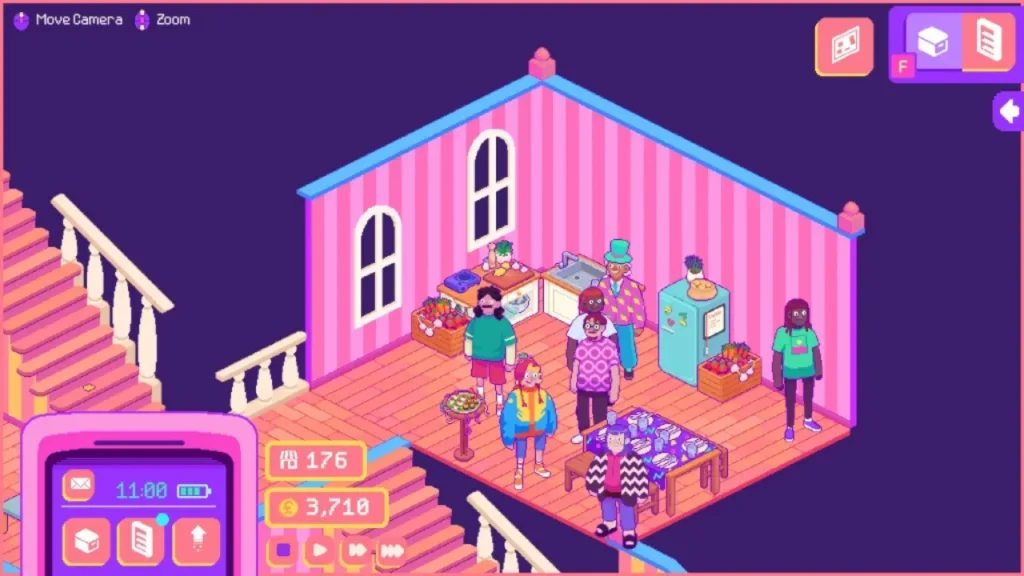
Boosting Your Daily Profits
Never let a free box slip through your fingers. Snagging zero cost inventory is the absolute best way to pull yourself out of a financial hole if you flirt with bankruptcy early on.
Stocking similar items also builds up your store’s genre score, which slaps a nice bonus onto your sales. Keep your wallet closed when it comes to high tier boxes and fancy decorations during your first week. Instead, focus strictly on buying the genres needed to push your main customer storylines forward.
Do not forget to act as your own janitor. Customers will drop trash all over your beautiful shop floor during a shift. Pick it up. Cleaning yields community points, which act as a special currency for unlocking unique decorations.
Pay close attention to your calendar. Scheduling events artificially inflates the demand for specific item types. The game tells you exactly what genre is trending the day before an event happens. Load up on boxes in that specific category to guarantee massive sales. If you are struggling to track down exact items to keep your regulars happy, refer to our complete Thrifty Business walkthrough and item location guide to streamline your stocking process.
Decoding Item Categories
The box system relies heavily on overlapping categories. You do not always need to buy a hyper specific box to find what you are looking for.
Customers are also surprisingly flexible. If someone asks for a specific piece of gear, handing them an exact match in a completely different color usually gets the job done. While buying specific boxes increases your odds, here is a quick breakdown of how the loot tables overlap:
| Box Type | Potential Overlapping Contents |
| Outdoor | Camping Gear, Sporting Goods |
| Media | Electronics, Cameras |
| Cooking | Baking Supplies, Kitchenware |
| Crafting | Household Tools, DIY Items |
Time Management and Shift Optimization
There is zero reason to stare at the screen doing nothing while your customers slowly browse. Use the fast forward button aggressively. If you have finished tidying up and the register is empty, speed up time.
Because stock boxes refresh daily, skipping through a slow day is often the smartest move. If your shelves are completely bare, just blaze through the shift. Customers will simply walk in, realize you have nothing, and leave.
Try to organize your basement or upper floors before opening the store. However, keeping the main ground floor fully stocked while the shift is actively running is a great way to stay busy and maximize your daily revenue window.